
Blog
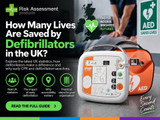
How many lives are saved by defibrillators in the UK?
There is no single UK figure showing exactly how many lives are saved by defibrillators alone.
Survival from an out-of-hospital cardiac arrest depends on several linked actions, including recognising cardiac arrest, calling 999, starting CPR, using a defibrillator as quickly as possible and receiving subsequent medical treatment.
However, UK evidence is very clear that early CPR and early use of an automated external defibrillator (AED) can substantially improve the chance of survival.
Resuscita
…
5th Sep 2026
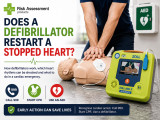
Does a defibrillator restart a stopped heart?
No, a defibrillator does not simply restart a completely stopped heart.
An automated external defibrillator (AED) analyses the electrical activity of the heart and delivers a shock only when it detects a heart rhythm that can benefit from defibrillation.
The shock is designed to interrupt certain dangerous abnormal electrical rhythms, giving the heart's normal electrical activity an opportunity to resume.
If someone is unresponsive and not breathing normally, call 999, start CPR and use an AED a
…
24th Aug 2026
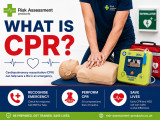
What is CPR?
CPR stands for cardiopulmonary resuscitation. It is an emergency procedure used when someone is unresponsive and not breathing normally, which may indicate cardiac arrest.
CPR uses repeated chest compressions to help keep blood circulating to the brain and other vital organs while emergency medical help and a defibrillator are on the way.
Anyone can learn CPR, and acting quickly can make a significant difference to a person's chance of survival.
What Does CPR Stand For?
CPR stands for:
Cardiopul
…
24th Aug 2026

What does Coshh stand for?
COSHH stands for Control of Substances Hazardous to Health. The Control of Substances Hazardous to Health Regulations 2002, commonly known as the COSHH Regulations, require employers to assess and control exposure to substances that could cause ill health in the workplace.
Hazardous substances are not limited to obvious industrial chemicals. They can include cleaning products, paints, dusts, fumes, vapours, gases, mists and biological agents that employees may encounter as part of their work.
Un
…
18th Aug 2026
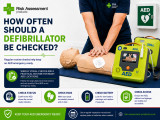
How often should a defibrillator (AED) be checked?
A defibrillator should be checked regularly to make sure it is emergency ready. There is no single checking frequency that applies to every AED in every setting, so you should always follow the manufacturer’s instructions and any requirements that apply to your organisation.
For many workplaces, schools and community defibrillators, carrying out a simple visual check every week is a practical way to identify problems such as expired pads, a low battery, damage or a warning on the AED statu
…
26th Jul 2026